Decoding the Popular Ken Jeong 'Ha Gay' GIF Trend: A Deep Dive into Digital Humor
In the vibrant, fast-paced world of internet communication, certain images and phrases transcend their original context to become universal shorthand for a feeling, a reaction, or a punchline. Among these digital mainstays is the instantly recognizable "Ha Gay" GIF featuring the inimitable Ken Jeong. This particular animated snippet has solidified its place in online discourse, popping up in countless chats, social media feeds, and forums. But what exactly makes the
Ken Jeong's 'Ha Gay' GIF so enduringly popular, and what insights does its prevalence offer into modern digital humor?
This article delves into the phenomenon of the
Ha Gay Gif, exploring its likely origins, dissecting its widespread appeal, and navigating the nuances of its usage in contemporary online interactions. We'll unpack how a brief, seemingly simple clip can capture the zeitgeist and become a powerful tool for expression in an increasingly visual communication landscape.
The Genesis of a Viral Moment: Ken Jeong's Signature Impact
To understand the enduring popularity of the
Ha Gay Gif, one must first appreciate the comedic genius of Ken Jeong himself. Known for his over-the-top delivery, distinctive facial expressions, and roles that often blend absurdity with surprising depth, Jeong has carved out a unique niche in Hollywood. From his breakout role as Leslie Chow in *The Hangover* franchise to his beloved portrayal of Ben Chang in *Community*, Jeong's characters are often memorable for their bombastic personalities and quotable lines.
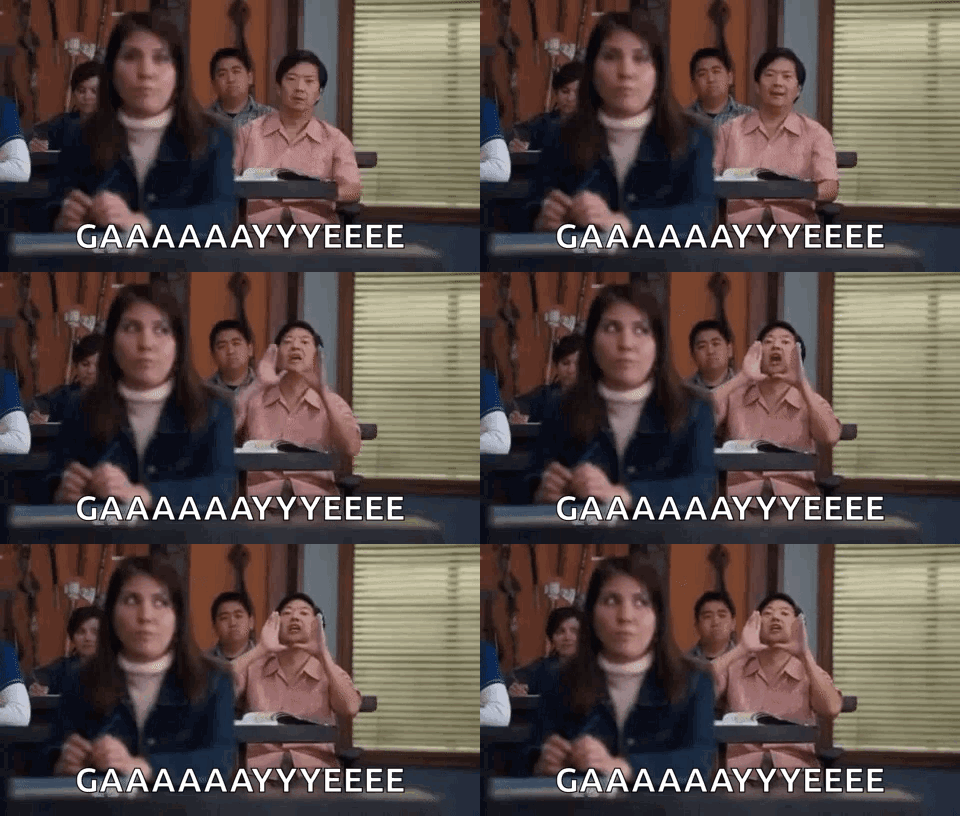
While the exact original source material for the "Ha Gay" GIF can be difficult to pinpoint definitively without deep archival research, it almost certainly stems from one of these iconic roles or appearances where his character delivers a line with his signature, exaggerated flair. The moment is typically characterized by Jeong's wide-eyed, slightly mischievous, or sarcastically triumphant expression, followed by the utterance of "Ha! Gay!" or a similar phrase, often in response to something perceived as unexpected, ironically dramatic, or playfully camp.
The transformation of such a moment into a GIF is a testament to the internet's ability to isolate and amplify specific cultural touchstones. A mere few seconds of footage are extracted, looped, and compressed, ready to be deployed across myriad platforms. It's not just the words, but Jeong's *delivery* – the smirk, the gesture, the vocal intonation – that makes the clip instantly recognizable and deeply impactful, transforming a simple phrase into a multi-layered comedic response. This rapid memeification process ensures that content featuring highly expressive personalities like Ken Jeong often finds a second life as a viral sensation.
Decoding the Enduring Appeal of the Ha Gay Gif
What is it about this particular
Ha Gay Gif that has resonated so deeply with internet users, cementing its status as a go-to reaction image? The answer lies in a confluence of factors that tap into both universal comedic principles and the specific dynamics of online communication.
*
Ken Jeong's Persona: As mentioned, Jeong's comedic brand is one of bold, often unhinged humor. His characters frequently push boundaries, making his reactions inherently amusing and shareable. His delivery of "Ha! Gay!" carries an ironic, playful, and often self-aware tone, preventing it from being purely derogatory in most contexts.
*
Versatility in Usage: The GIF's power lies in its adaptability. It can be used:
* As an ironic commentary on something dramatic or over-the-top.
* To playfully tease a friend about a preference or action.
* As a self-deprecating joke.
* To express a sarcastic "Aha! I knew it!" moment.
* To inject levity into a conversation about something slightly awkward or unexpected.
Its broad applicability allows users to convey a range of nuanced emotions and reactions without typing out lengthy explanations.
*
Conciseness and Impact: In an era of shrinking attention spans, GIFs offer a potent blend of visual and textual communication. They convey an immediate message with minimal effort, making them perfect for quick replies in chat applications or social media comments. The sudden appearance of Ken Jeong's face and voice provides an instant dose of humor.
*
The Shared Experience of Meme Culture: Using the
Ha Gay Gif is often an "in-group" signal. Those who understand its context and comedic intent feel a sense of camaraderie. It’s part of a shared language of the internet, a digital nod that signifies cultural fluency. This sense of belonging reinforces its usage and perpetuates its virality.
*
Emotional Amplification: Good GIFs excel at amplifying emotions. Ken Jeong's animated delivery isn't just saying words; it's conveying a *feeling* – a mixture of surprise, judgment, and playful mockery, all wrapped in a comedic package.
This synergy of factors makes the
Ha Gay Gif more than just a fleeting trend; it's a testament to how specific cultural moments, when perfectly packaged, can become integral to our digital lexicon.
Navigating Nuance: Context, Intent, and Responsible Usage
While the
Ha Gay Gif is predominantly used in jest, often among friends or in communities where its playful intent is understood, it's crucial to address the potential for misinterpretation or misuse. The phrase "gay" can, in other contexts, be used as a slur, and awareness of this is paramount in online communication. Understanding the implications of the
understanding the 'Ha Gay' phrase from the Ken Jeong GIF is key.
Here are some insights into using this GIF, and similar ones, responsibly:
*
Context is King: The meaning of the GIF largely depends on the conversation it's embedded in and the relationship between the communicators. Among close friends who understand your humor, its playful intent is clear. In a formal setting, with strangers, or in a sensitive discussion, it could easily be misunderstood.
*
Intended Tone vs. Received Tone: Always consider how your message might be *received*, not just how you *intend* it. What might be ironic humor to you could be hurtful or offensive to someone else, especially if they are unfamiliar with meme culture or Ken Jeong's comedic style.
*
Audience Awareness: Before sending, quickly assess your audience. Is it a diverse group? Are there individuals who might be sensitive to the language, even if used jokingly? When in doubt, err on the side of caution.
*
The Evolution of Language: Internet culture often re-appropriates and redefines words. While "gay" used as a general pejorative is problematic, within the specific context of this GIF, it often functions more as a non-literal expression of "ridiculous," "over-the-top," or "unconventional" in a lighthearted way. However, this re-appropriation doesn't erase the word's historical or current use as a slur, making careful consideration essential.
*
Self-Reflection: Ask yourself *why* you're using the GIF. Is it to genuinely elicit a laugh, or is there any underlying negativity? Digital communication offers anonymity, but responsible users understand the impact of their words and images.
Ultimately, like any form of humor, the
Ha Gay Gif thrives on shared understanding. Its usage highlights the complex dance between intent, context, and reception in the digital age, urging users to wield their digital tools with thoughtfulness.
Beyond the Pixels: The Lasting Impact of Viral GIFs
The journey of the
Ha Gay Gif from a screen moment to a widespread internet phenomenon is emblematic of how viral content shapes modern communication. GIFs like this are more than just animated images; they are cultural artifacts that reflect and influence the way we interact, express ourselves, and consume media.
*
Shaping Digital Lexicons: Viral GIFs create new forms of digital shorthand. They become part of an unspoken language that allows for richer, more nuanced, and often funnier interactions than text alone.
*
Democratizing Humor: Anyone with internet access can create, share, and consume GIFs, democratizing the spread of humor and cultural commentary. This fosters a dynamic, evolving landscape of jokes and references.
*
Extending Cultural Shelf Life: Moments from TV shows, movies, and even obscure internet clips gain extended life as GIFs, introducing them to new audiences and cementing their place in collective memory. Ken Jeong’s characters remain relevant partly due to their GIF-able moments.
*
Mirroring Society: The popularity of certain GIFs can offer insights into prevailing moods, anxieties, or comedic preferences of a digital generation. They are micro-narratives that capture a slice of contemporary culture.
The enduring popularity of the
Ha Gay Gif underscores a fundamental truth about internet culture: when a moment perfectly encapsulates a widely understood emotion or reaction, and is delivered by a charismatic figure like Ken Jeong, it possesses an almost limitless power to connect, amuse, and become a part of our shared digital experience.
Conclusion
The Ken Jeong "Ha Gay" GIF stands as a vibrant example of how a snippet of media can transcend its original purpose to become a cornerstone of online communication. Fueled by Ken Jeong's distinctive comedic style and the internet's innate ability to amplify expressive moments, this GIF has become a versatile tool for humor, playful teasing, and ironic commentary across countless digital platforms. Its enduring appeal lies in its quick impact, adaptability, and the shared cultural understanding it fosters among users. However, like all forms of digital expression, its usage carries the responsibility of considering context, intent, and audience to ensure its playful spirit isn't misconstrued. As we navigate the ever-evolving landscape of digital interaction, viral GIFs like the
Ha Gay Gif continue to enrich our conversations, proving that sometimes, a few seconds of animation can speak volumes.